

How to Calculate Your Home Equity
Home equity is the difference between your home's current value and the total debt secured by the property, including your mortgage and any home equity loans or lines of credit.
Home Value
Debt
Home Equity
Estimated home value: $800,000
Mortgage balance: $500,000
Estimated equity: $300,000
This is a hypothetical example for illustration only. Your numbers will be different.
Knowing Your Equity Is Helpful. Understanding It Over Time Is Better.
Looking up your home's estimated value online can be helpful, but it only tells you part of the story.
It doesn't show you how much you still owe on your mortgage, how much estimated equity you've built, or how those numbers are changing together over time.
What If Your Home Came With a Monthly Statement?
Bank accounts and retirement accounts come with regular statements. Your home usually doesn't, even though it may be one of the largest assets you own.
That's why I provide homeowners with a personalized Monthly Home Statement.
Think of it as a monthly check-in on your home. Instead of relying on a single home-value estimate, the statement brings information about your home and mortgage together in one place.
Your statement can include:
- Estimated home value and equity, and how they've changed
- Your mortgage balance and loan progress
- How additional principal payments could affect your loan
- Estimated rental value
- Illustrations of other homeowner scenarios
You don't need to be buying, selling, or refinancing to get one. Any homeowner can sign up.
Monthly Home Statement powered by myHomeIQ.
What Your Home Value Doesn't Tell You
Your estimated home value is one piece of the picture. Here's why I provide homeowners with a Monthly Home Statement.
Want your own personalized report?
YES! I Want My Personalized Monthly Home Statement! →Read the Video Transcript
Have you ever looked up your home's value online and wondered what that number really tells you?
Hi, I'm Jody's AI Twin. Jody Canfield is a Mortgage Advisor, NMLS 279580. This video is for general education only.
The videos are AI generated. The mortgage education isn't.
Looking up your home's estimated value online can be helpful, but it only tells you part of the story.
It doesn't show you how much you still owe on your mortgage, how much estimated equity you've built, or how those numbers are changing together over time.
That's why Jody provides homeowners with a personalized Monthly Home Statement.
It brings your estimated home value and mortgage information together, so you can see your estimated equity, follow how it changes, and explore things like what additional principal payments could do to your loan.
The statement can also include an estimated rental value and illustrations of what purchasing another property could potentially look like.
The values and scenarios in the report are estimates, but they can give you a useful way to keep track of your home and mortgage in one place.
And you don't need to be buying or refinancing to get one. Any homeowner can sign up.
Having equity doesn't mean you need to do anything with it. Sometimes you may look at your statement and think, "We're good exactly where we are." Other times, something might raise a question.
That's what Jody is there for. Her goal isn't to tell you what to do with your equity. It's to help you understand the information and talk through your options when your plans or circumstances change.
A Look Inside Your Monthly Home Statement
Your statement brings information about your home and mortgage together in one place. Here are a few of the things you can follow each month.
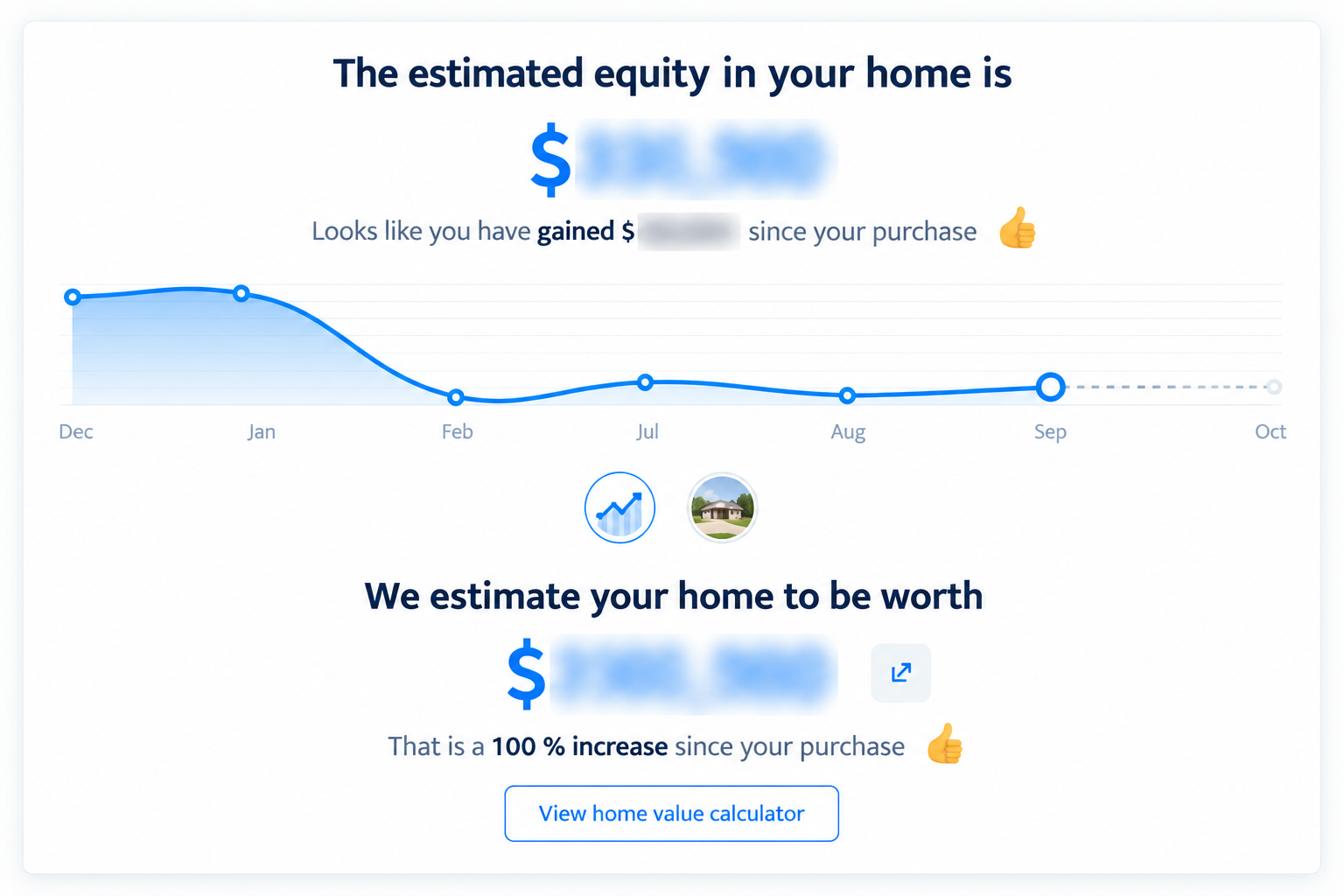
See How Your Estimated Equity Is Changing
A single home value tells you where things stand today. A trend gives you more context.
Your statement lets you follow your estimated equity over time. Changes may come from shifts in your home's estimated value, paying down your mortgage, or both.
Instead of reacting to one estimate that happens to be up or down this month, you can see how the bigger picture is changing.
Sample Monthly Home Statement. Financial figures have been obscured for privacy. Estimated home values are generated by automated valuation tools and are not an appraisal. Actual home value and equity may differ.
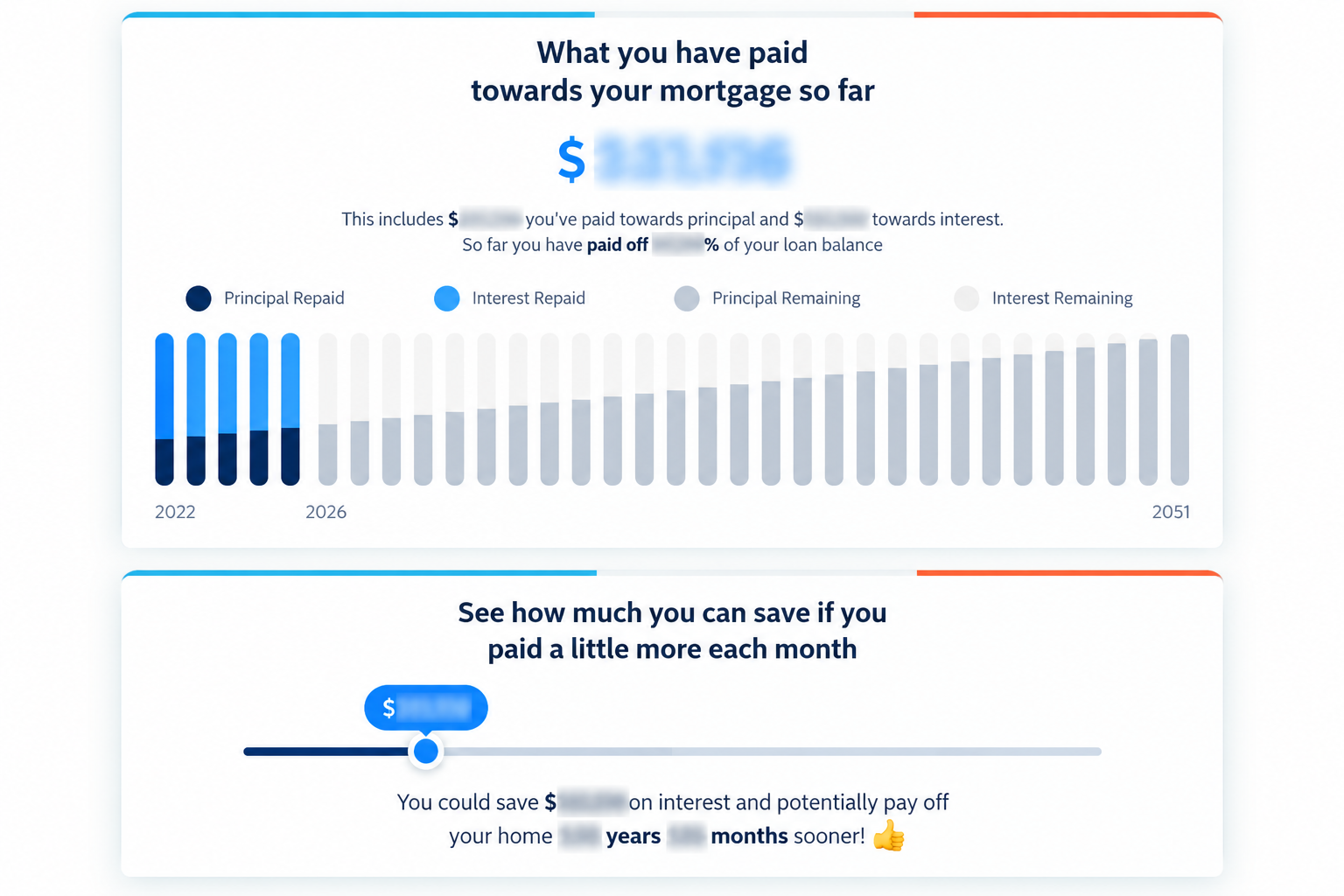
See How Your Mortgage Is Progressing
With a typical amortizing mortgage, your principal balance gradually decreases as you make your scheduled payments.
Your statement can also help you explore how additional principal payments could affect the loan.
Seeing the answer doesn't mean you should do it. Extra principal payments can reduce interest and shorten the payoff timeline, but they also move money from your bank account into your home, where it may be harder to access.
The point isn't to tell you what to choose. It's to help you understand the tradeoffs alongside your other priorities and the amount of cash you want to keep available.
Sample Monthly Home Statement. Financial figures have been obscured for privacy. Extra-payment scenarios are estimates based on loan information and assumptions. Actual results may differ.
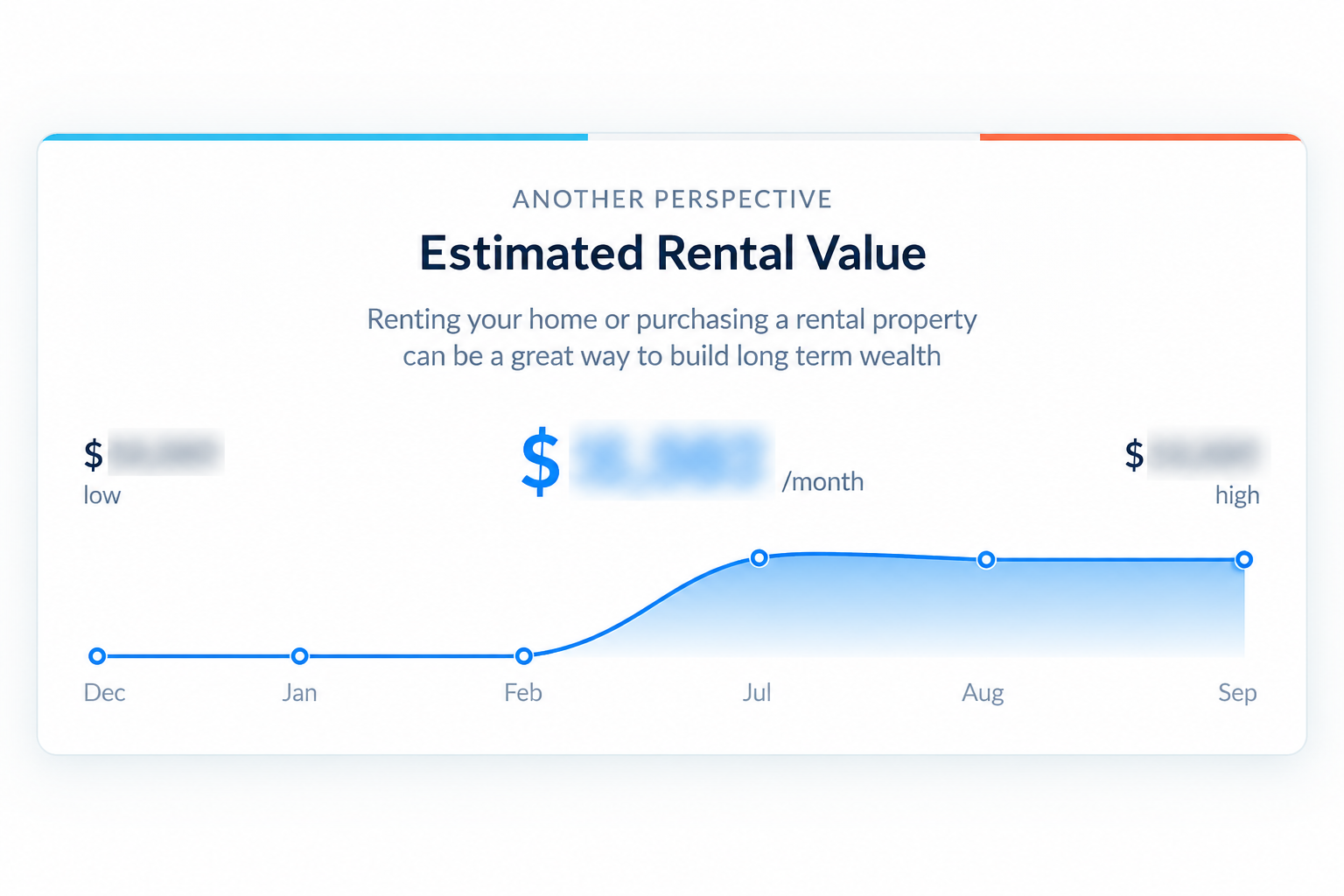
See Your Home as Part of the Bigger Picture
Your statement can also show an estimated rental value, giving you another piece of information about your home.
It's not there to push you toward a next move. It's there so you have useful context if a question ever comes up.
Having equity doesn't mean you need to do anything with it. Sometimes the conversation ends with, "We're good exactly where we are."
In other situations, equity may become part of a discussion about:
- Buying another property
- Home improvements
- Other debt
- Long-term financial planning
- Changes in your household
Whether using equity makes sense depends on your goals, your finances, the costs, the risks, and the alternatives. That's worth talking through before a decision, not after.
Assess. Align. Accelerate.
Your home and mortgage are pieces of a larger financial picture. Better information can help you make more intentional decisions.
Assess
Understand where you are today.
Align
See how your mortgage and home equity fit into your broader financial plan.
Accelerate
Use better information to make intentional decisions when your goals or circumstances change.
Questions About Home Equity
Is my home's online value the same as an appraisal?
Can my equity go down?
How often will I receive my Monthly Home Statement?
Do I need to be buying or refinancing to sign up?
Want to Keep an Eye on Your Home and Mortgage?
A lot can change in a month, including your home's estimated value and your mortgage balance. Your Monthly Home Statement puts your estimated home value, equity, and mortgage details in one place, so keeping track is easy.
YES! I Want My Personalized Monthly Home Statement!Share a few details about your home and your email address. You'll receive an updated statement each month.
Have a question about something you see? That's what I'm here for. You don't need to be buying or refinancing to reach out.
Ask a Question →